Resources
Guides to NDIS behaviour support
Plain-language articles for participants and families, support workers, teachers, practitioners and support coordinators.
Free tool
Visual timer and First/Then board
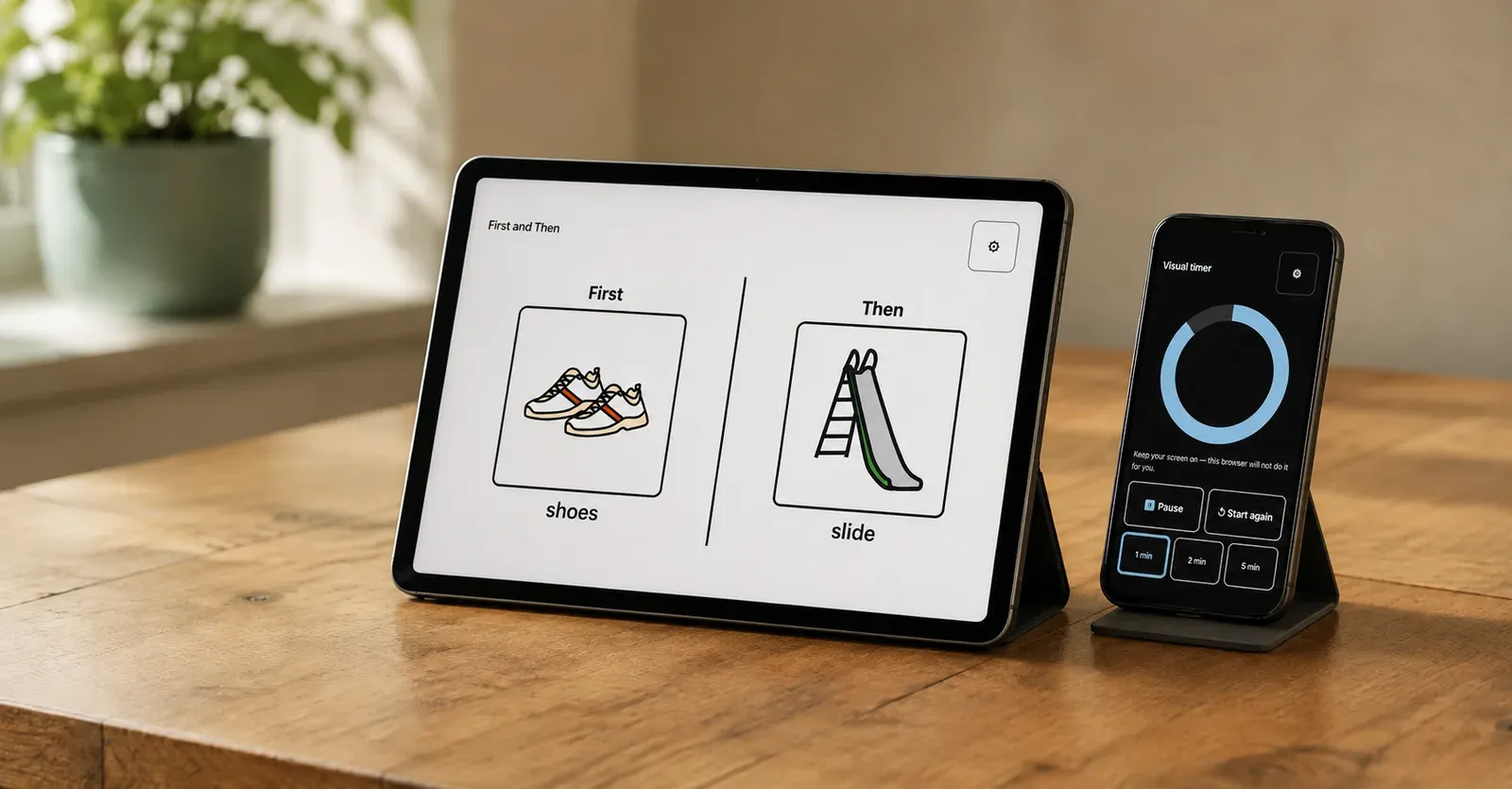
Free tools you can use on your phone or print at home: a visual timer and a First/Then board.
-
 familiessupport workersteachers
A visual timer or a First/Then board: which one, and how to use them well
Two free tools for showing someone what's coming next — when each one fits, how to introduce them, and the mistakes worth avoiding. For families, support workers, teachers and practitioners.
-
 familiessupport workersteacherspractitioners
What the research says about visual supports (and what it doesn't)
Picture schedules, First/Then boards and visual timers, in plain language: what the evidence actually supports, what it doesn't, and why that distinction matters — for families, support workers, teachers and practitioners.
-
 familiessupport workersteachers
Why transitions are so hard — and what actually helps
Leaving somewhere good, turning the screen off, getting in the car. A plain-language look at why these moments go wrong — at home, on shift and in the classroom — and what tends to make them easier.
-
 providerscoordinators
A support coordinator's guide to referring for behaviour support
A plain-language guide for support coordinators: when to refer for behaviour support, what funding applies, and how referrals work with Benjamin.
-
 familiescoordinators
Which part of my NDIS plan pays for behaviour support?
A plain-language guide to where behaviour support sits in your NDIS plan, how Capacity Building differs from Core, and what to do if it's missing.
-
 familiescoordinators
How to get a behaviour support plan through the NDIS
A plain-language, step-by-step guide to getting a behaviour support plan funded, choosing a practitioner, and putting the plan into practice.
-
 familiessupport workersteacherspractitioners
What is Positive Behaviour Support?
A plain-language guide to positive behaviour support (PBS) for participants, families, support workers and teachers — what it is, what it isn't, and how it can help.